Sensory profile
A sweet, airy confectionery direction that may include caramelized-sugar, vanilla, berry, creamy or novelty notes according to the reference.
 NOURISHING WHAT MATTERS
Learn what cotton candy flavor is, how the profile is developed and used, and how to specify it for drinks, desserts, confectionery, bakery and commercial product concepts.
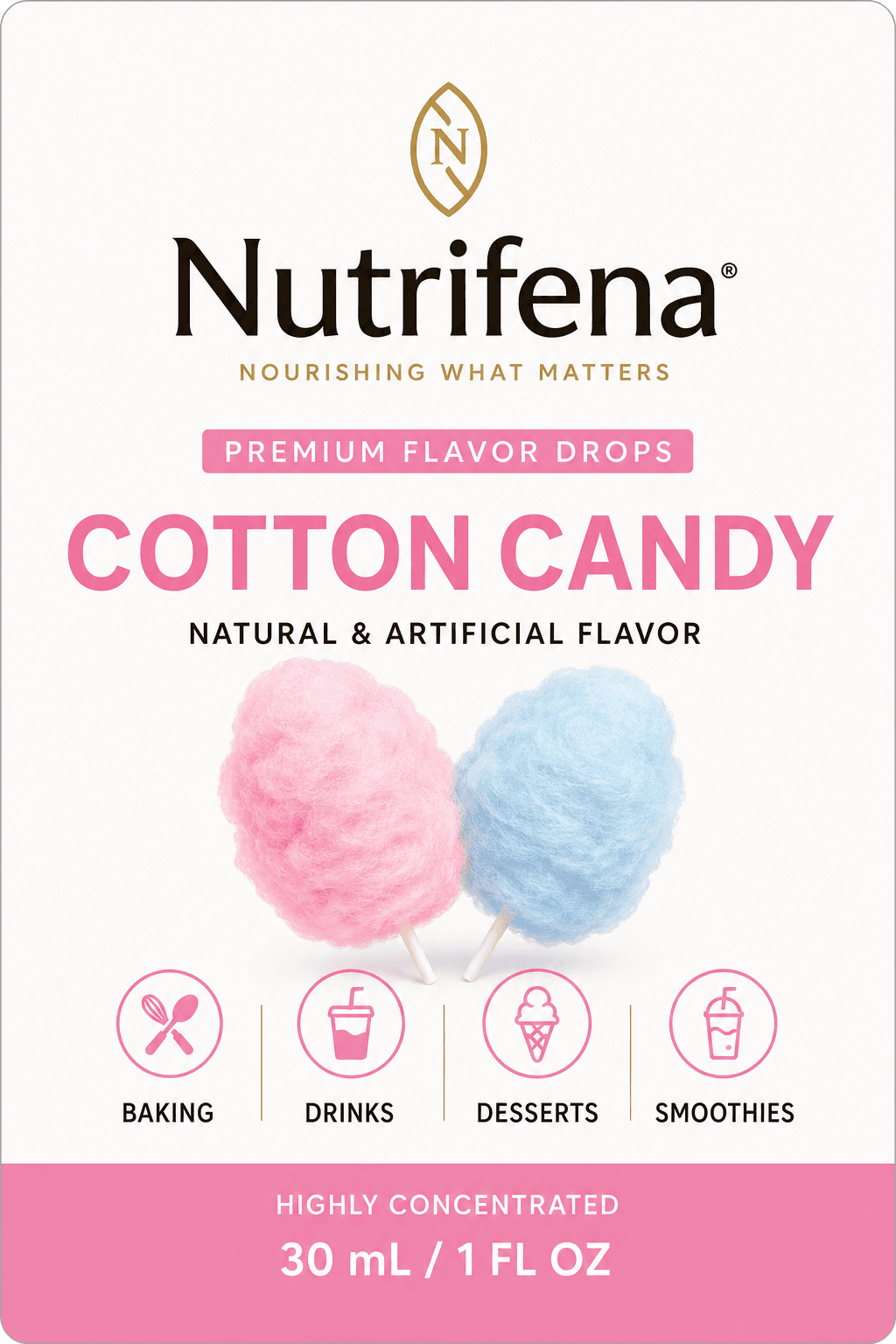 Nutrifena Flavor Drops · 30 mLCotton CandyView all five flavors
Cotton candy flavor is a confectionery-style sensory preparation designed to create the familiar impression associated with spun sugar: light sweetness, caramelized-sugar or vanilla-like notes and, depending on the brief, fruit, berry or novelty accents. The flavor is not cotton candy itself and does not automatically supply sugar, sweetness, blue or pink color, texture or a finished formula.
Nutrifena currently presents Cotton Candy within its five-profile Flavor Drops collection as a 30 mL liquid product with its own SKU and GTIN. Industrial B2B flavor sourcing is a separate requirement and must be defined by application, profile, classification, carrier, process, package, annual volume and destination. The collection page remains the commercial destination for the 30 mL item; this category page explains the broader formulation and sourcing intent.
Cotton candy flavor does not establish sugar content, sweetness, color, natural status, allergen status or finished-product identity. Confirm composition, carrier, flavor classification, directions, allergens and market suitability for the exact selected product. The Nutrifena 30 mL Flavor Drops collection and an industrial flavor request are different commercial scopes; availability and use must not be inferred from one to the other.
Cotton candy flavor is a concentrated flavor profile used to make another product smell and taste reminiscent of spun-sugar confectionery.
Traditional cotton candy is made by melting granulated sugar and spinning the liquid into extremely fine strands that cool rapidly. Its texture is airy and dissolves quickly in the mouth. Cotton candy flavoring captures a sensory idea associated with that experience, but it is a separate ingredient. It can be added to a beverage, icing, frozen dessert or other formulation that never passes through a cotton candy machine.
The profile is not defined by one universal recipe. Some versions emphasize light caramelized sugar and vanilla, while others include berry, strawberry, blue-raspberry, creamy or fantasy-candy notes. Color and packaging can strongly influence what a consumer expects. A bright blue product may be perceived differently from a pink or uncolored product even when the same flavor is used.
Commercial cotton candy flavor is concentrated and must be evaluated at controlled use levels in the intended application. Its composition, carrier, strength, solubility or dispersibility, classification and storage conditions belong to the exact product specification. The name alone does not indicate whether it is natural, artificial, sugar-free, allergen-free or suitable for water, baking or any other use.
A sweet, airy confectionery direction that may include caramelized-sugar, vanilla, berry, creamy or novelty notes according to the reference.
A concentrated commercial ingredient with a supplier-defined formula and carrier. It is not the finished spun-sugar candy.
Flavor can suggest sweetness through aroma, but the formula’s sugars or sweeteners establish measurable sweetness, solids and nutrition.
Pink, blue, purple or no added color can support different visual concepts. Flavor and color remain separate ingredient decisions.
Selected through supplier guidance and controlled trials. Excess can create perfumery, artificial, bitter or unbalanced impressions.
Water, acidic drinks, dairy, fat-based systems, bakery and candy can express the same flavor differently.
These products share a sensory theme but solve different manufacturing and formulation tasks.
Cotton candy itself is a finished spun-sugar confection. A machine melts a prepared sugar feed and forms fine strands through centrifugal force and rapid cooling. Floss sugar is the granular feed prepared for that equipment and may include sugar, flavor and color. Neither material is a direct substitute for concentrated flavor in a low-sugar drink or dairy product.
Cotton candy syrup is usually a sweet liquid containing sugar or another sweetener, water, flavor and possibly color, acid, preservative or other components. It adds volume, water and solids along with sensory character. An industrial flavor is much more concentrated and is used as one input in a complete formula. Replacing syrup with flavor changes sweetness, viscosity, nutrition, water activity and process requirements.
Cotton candy flavor drops describe a small liquid delivery format. Nutrifena’s Cotton Candy Flavor Drops is a named 30 mL product within a collection. It should not be represented as a bulk industrial flavor package. Manufacturers seeking drums, pails or another industrial quantity should submit an application and specification so availability, formulation, packaging and commercial terms can be reviewed separately.
Finished confection made from melted and rapidly spun sugar. Texture, immediate dissolution and visual volume are central to the eating experience.
Granular feed for a cotton candy machine, commonly combining sugar with an application-specific flavor and color preparation.
Concentrated sensory ingredient used in another formula. It does not automatically contribute sugar, spun texture or color.
Sweet liquid system that can provide flavor, sugar or sweetener, water and other formulation components at a larger dose.
Compact liquid delivery format with product-specific directions, SKU, package and commercial positioning.
B2B flavor sourced by profile, carrier, application, process, classification, package, MOQ and annual volume.
A useful brief describes the desired character instead of requesting only a strong cotton candy taste.
The smell associated with cotton candy can be described through sweet, caramel-like, vanilla-like and lightly cooked-sugar impressions. Scientific aroma work in other sugar-rich foods shows that several volatile compounds can carry caramel, sweet or cotton-candy descriptors, illustrating why the profile is an accord rather than one simple taste. A flavorist balances multiple notes to create a recognizable result in the intended product.
Classic carnival-style cotton candy may be relatively light and airy. Blue cotton candy concepts are often paired with berry or blue-raspberry expectations, while pink concepts may lean toward strawberry or general red-fruit associations. Those pairings are commercial conventions, not fixed identities. The buyer should state whether fruit character is required, acceptable or unwanted.
Vanilla and creamy notes can round the profile in dairy, frosting and frozen dessert systems. Caramel or cooked-sugar notes can add depth but may make a beverage feel heavy if overused. Acidity can brighten a fruit-linked cotton candy concept while making a creamy target less convincing. A sensory brief should define onset, intensity, middle, finish, acceptable supporting notes and defects to avoid.
Light, airy and immediately recognizable without a strong named-fruit direction. Define how caramelized or vanilla-like it should be.
A visual and sensory concept that may include strawberry, berry or vanilla associations but has no universal formula.
Often paired commercially with berry or blue-raspberry expectations. Color and flavor must be selected and declared independently.
Adds rounded vanilla or dairy-style support for ice cream, frosting and dessert applications.
Provides deeper cooked-sugar character. Excess can move the profile toward caramel, burnt sugar or heavy confectionery.
Combines cotton candy with fruit, citrus, sour, energy-drink or fantasy notes for a defined product concept.
A product can smell sweet without containing sugar, look like cotton candy without tasting right or taste right without being pink or blue.
Flavor contributes aroma and selected taste impressions. Sugar contributes sweetness, solids, viscosity, browning and energy; high-intensity sweeteners contribute sweetness at much lower use levels but can have different timing and aftertaste. A cotton candy flavor cannot replace the physical functions of sugar in candy, bakery, syrup or frozen dessert. Reduced-sugar concepts may need bulking, mouthfeel and freezing-point solutions beyond flavor.
Color establishes the visual cue. FDA regulates color additives separately and specifies permitted uses, restrictions and labeling. A manufacturer may use an approved pink, blue, purple or other color system, or leave the product uncolored. The selected color must survive the formula’s pH, heat, light and package exposure. The phrase cotton candy flavor does not authorize or identify a color.
Acid and salt change contrast and perception. Citric or malic acid can support sour-candy or fruit-linked concepts, while a classic spun-sugar profile may need lower acid impact. Proteins, vitamins, minerals, botanicals and caffeine can introduce bitterness, metallic notes or color that requires a stronger or modified flavor system. Development should balance these roles together while documenting each ingredient separately.
Creates the cotton candy sensory identity. Confirm exact classification, carrier, strength, compatibility and use guidance.
Adds sweetness and substantial physical functions. Its replacement changes solids, body, browning, freezing and water activity.
Can support reduced-sugar concepts but may introduce delayed sweetness or aftertaste that changes flavor perception.
Creates the intended visual code. Select separately by exact identity, permitted use, stability and label declaration.
Controls tartness and can shift the concept toward sour candy or fruit. It also affects pH-sensitive colors and beverage stability.
Hydrocolloids, proteins, fats, starches and solids create body or structure that flavor alone cannot supply.
Every application changes aroma release, sweetness balance, processing exposure and the amount of supporting flavor needed.
In flavored-water concepts, a light profile can be difficult to balance because the base contributes little body. Water quality, acid, sweetener, mineral content and serving temperature can expose carrier notes or bitterness. Carbonated drinks add carbonic bite and volatile release, while energy or functional beverages may contain caffeine, vitamins, minerals or botanicals that require masking and can shift the cotton candy profile.
Bakery systems expose flavor to mixing, oven heat, moisture loss and browning. The volatile top notes that work in icing may not survive in cake or cookies at the same level. A manufacturer can evaluate a flavor in the batter, post-bake filling, frosting or multiple components, but each addition point changes retention and label composition. Sugar and fat levels influence both aroma release and the familiar confectionery impression.
Ice cream and frozen desserts suppress aroma at low temperature and add fat, protein, overrun and freeze concentration to the sensory system. Candy and syrups can hold flavor in high-solids matrices with different release patterns. Protein powders and dry drink mixes must protect aroma from moisture and package loss while dispersing consistently. The exact liquid flavor must be tested through preparation and intended storage.
Balance low body, sweetener, acidity and serving temperature. Check clarity, haze, ring formation and flavor persistence.
Test against caffeine, vitamins, minerals, botanicals, acids and carbonation; cotton candy naming does not define the active formula.
Separate heat-exposed batter or dough from post-bake icing and fillings. Compare retention and sensory balance in each component.
Evaluate high solids, cook temperature, acid addition, flavor distribution, color and release during eating.
Approve after pasteurization, aging, freezing and storage at actual serving temperature because cold suppresses aroma.
Control flavor distribution, carrier compatibility, moisture, flow, package barrier and performance after reconstitution.
A fresh bench sample is only the first checkpoint; the approved profile must survive manufacture and shelf life.
Flavor components vary in volatility and stability. Open mixing, heating, baking, concentration, spray drying or long holding can reduce delicate top notes. Total loss depends on time, temperature, surface area, airflow and addition point. Adding flavor later can improve retention in some systems, but the step must still deliver uniformity and comply with the validated manufacturing process.
Carrier compatibility affects whether a liquid flavor dissolves, disperses, floats, rings or binds to other ingredients. Acidic beverages, emulsified dairy systems, fat-based confectionery and dry premixes require different handling. If a pre-dilution is used for accurate dosing, the diluent, ratio, hold time and microbial implications become part of the manufacturing instruction.
Packaging controls aroma escape, oxygen ingress, light exposure and odor transfer. Small 30 mL bottles and industrial containers have different opened-use patterns. Finished drinks, baked goods and frozen desserts also need their own package studies. Retain an approved reference and assess intensity, balance, color, off-notes and overall identity throughout intended life.
Replicate the full time-temperature history, including come-up, hold, baking, cooling and any reheating.
Compare process-compatible stages and verify both aroma retention and uniform distribution at production scale.
Limit uncontrolled exposure where appropriate; long uncovered holds can increase volatile loss before filling.
Check dissolution or dispersion, haze, separation, rings, sediment and interaction with the real product base.
Evaluate aroma retention, seal, oxygen and odor transfer with the intended container and distribution conditions.
Define storage and handling after opening for both a small bottle and any industrial package according to product documentation.
A flavor supplier translates a sensory reference into a reproducible liquid flavor system; exact formulas remain supplier specific.
Development begins with a brief describing classic spun sugar, pink or blue novelty, berry, vanilla, caramel, creamy or sour direction. A flavorist selects permitted flavoring materials that can create the desired opening aroma, middle and finish in the destination market. Sensory evaluation and analytical knowledge help build the accord, but the final system is judged in the intended application.
The flavoring components are combined with a liquid carrier suitable for the supplier product and manufacturing process. Carrier identity, concentration, allergens, solubility and classification are not determined by the cotton candy name. The batch is mixed under controlled conditions, standardized to an approved reference and tested according to its specification before release.
A released flavor is still one ingredient in the customer’s formula. The manufacturer must qualify the exact lot and documents, establish storage and dosing, test it with sweetener, acid, color and functional ingredients, run the actual process, approve the label and validate packaged shelf life. Flavor supplier guidance provides a starting point rather than a universal recipe.
Define classic, pink, blue, berry, vanilla, creamy, caramel or sour direction plus the intended food or beverage.
Build the target accord from permitted substances appropriate to the desired classification and market.
Match strength, handling and compatibility to the commercial product; confirm exact carrier through documentation.
Control weighing, addition order, mixing and any batch adjustment against the flavor manufacturer’s approved reference.
Verify sensory and applicable quality attributes according to the exact product specification.
The customer confirms use level, processing, sweetness, color, label, package and shelf life in the finished product.
Controlled samples reveal whether the flavor is recognizable, balanced and stable at the intended sugar or sweetener level.
Prepare an unflavored control and several accurately weighed flavor levels in one standardized base. Keep sweetener, acid, color, temperature and mixing constant. If the project compares sweetener systems, complete that as a separate controlled series. Counting drops without confirming delivered mass can introduce large variation and make supplier comparisons unreliable.
Evaluate cotton candy identity, sweet aroma, caramelized or vanilla notes, fruit direction, intensity, onset and finish. Record unwanted perfumery, solvent-like, burnt, bitter or medicinal notes. Because pink and blue can create expectations, use coded uncolored samples during technical screening and add the selected color later to evaluate the combined consumer experience.
Repeat shortlisted levels after processing and during storage. Serve beverages cold or carbonated as intended, evaluate bakery after cooling, and taste frozen desserts at actual serving temperature. Document flavor SKU, lot, use level, preparation, process, package and sensory reference so scale-up and later supplier changes can be compared against the approved result.
Shows sweetness, acidity, bitterness, base aroma and color before the cotton candy flavor is added.
Reveals the range between barely perceptible, balanced, strong and over-flavored in the exact formula.
Coded samples reduce bias caused by blue or pink color, product name, brand and known dosage.
Hold the sugar or sweetener system constant so aroma performance is not confused with a sweeter formula.
Recreate heat, carbonation, freezing, baking or reconstitution before approving the winning level.
Compare intensity, balance, off-notes and color in the real package through the intended storage period.
The profile name does not establish natural or artificial classification, sugar content or color declaration.
In the United States, 21 CFR 101.22 addresses definitions and labeling for flavorings and colorings. The supplier’s flavor-classification statement and complete product information support review, while the finished manufacturer remains responsible for the label. A cotton candy profile cannot be declared natural merely because traditional cotton candy begins with sugar.
Sugar-free, zero sugar and no added sugar are finished-product claims with specific formulation and labeling implications. A flavor may contain little or no sugar yet be used in a product that contains sugar, or it may use a carrier that contributes material requiring review. Conversely, a sugar-free beverage still needs a sweetener and mouthfeel system appropriate to the claim and market. The flavor name proves none of these conditions.
Color declarations are separate. FDA explains that color additives must be authorized for intended uses and labeled according to applicable rules. Pink, blue or purple cotton candy concepts therefore need exact color selection and documentation. Natural, Organic, vegan, allergen-free and non-GMO statements likewise require product-specific evidence and should not be inferred from a novelty profile.
Natural, artificial or another market classification requires supplier evidence and destination-specific finished-label review.
Determined from the complete formula and applicable rules, not from the flavor name or sensory sweetness.
Follows the exact approved color additive and market requirements independently of the cotton candy flavor.
Confirm exact flavor components, carrier and manufacturing statement; novelty or fruit-style names are not evidence.
Requires certification for the exact ingredient and supply chain and cannot be inferred from natural classification.
Product name, characterizing flavor and imagery must accurately represent the complete food and applicable labeling requirements.
The correct path depends on package, volume, application, documentation and who will use the product.
Nutrifena Cotton Candy Flavor Drops is one of five named profiles in a 30 mL collection. The item has SKU NTF-FD-COT-30 and GTIN 00850089813028. The collection page presents the package and commercial inquiry route. Buyers should request current availability, order quantities, directions and wholesale terms rather than assuming the product is interchangeable with an industrial ingredient package.
An industrial flavor request should state finished application, target profile, liquid form, base composition, water or fat compatibility, process, use-level trial needs, classification, allergens, package preference, initial order, annual volume and destination. The flavor house or supplier may need to screen a different product whose concentration, carrier and documentation match industrial manufacturing.
For product developers, the 30 mL format may support selected concepts only according to its directions and suitability. It is not automatically a laboratory standard or scale-up substitute for a bulk flavor. If a project moves from Flavor Drops to industrial production, the new ingredient must be qualified and the formula, use level, process, label and shelf life revalidated.
Nutrifena Cotton Candy Flavor Drops with its own SKU and GTIN, presented within the five-profile collection.
Specify desired varieties, quantity, destination and sales channel for current Flavor Drops availability and terms.
Request a liquid B2B flavor by application, profile, process, classification, documents, package and annual volume.
Treat a change from 30 mL drops to an industrial grade as an ingredient change requiring new qualification and validation.
Request exact specification, composition, allergen statement, classification, carrier, storage and applicable regulatory documents.
Confirm MOQ, price, lead time, freight, package and destination for the exact selected product before launch.
The workflow separates the flavor profile from sweetness, color, process, packaging and commercial supply.
Set beverage, bakery, candy, dessert or dry-mix format, consumer, serving, package, shelf life, market and commercial volume.
Specify classic spun sugar, pink, blue, berry, vanilla, creamy, caramel, sour or another reference and list unwanted notes.
Decide whether the project concerns 30 mL Nutrifena Flavor Drops, wholesale collection purchasing or a separate industrial liquid flavor.
Define sugar or sweetener, acids, solids, mouthfeel and any pink, blue or other visual system independently from flavor.
Confirm form, carrier, classification, composition, allergens, application guidance, storage and available documents for the exact product.
Compare an unflavored control and multiple weighed levels in a consistent base, initially without visual bias where practical.
Test mixing, heat, baking, carbonation, freezing, drying, filling and serving conditions at production-relevant scale.
Reconcile flavor, sweetener, color, allergens, claims, directions and destination-market requirements with the approved formula.
Measure aroma retention, sweetness balance, color, separation, texture and off-notes in the intended package and storage.
Lock SKU, use level, process instructions, specifications, package, commercial terms, incoming checks and revalidation triggers.
Choose by the function the formula needs and the commercial format being purchased.
| Cotton candy format | What it contributes | What must be confirmed |
|---|---|---|
| Nutrifena Cotton Candy Flavor Drops 30 mL | Compact liquid product within the five-profile Flavor Drops collection, with SKU and GTIN. | Current availability, directions, wholesale quantity, destination, storage and suitability for the intended use. |
| Industrial liquid cotton candy flavor | Concentrated B2B sensory ingredient sourced for manufacturing. | Profile, strength, carrier, classification, allergens, compatibility, process, package, MOQ, documentation and annual volume. |
| Cotton candy syrup | Sweet liquid system commonly contributing water, sugar or sweetener, flavor and potentially color or preservatives. | Dilution, solids, nutrition, pH, microbial control, opened life, package and difference from concentrated flavor. |
| Floss sugar | Granular sugar feed prepared for a cotton candy machine, potentially including flavor and color. | Machine compatibility, granulation, melting, humidity, color, flavor, package and finished confection operation. |
| Spun cotton candy | Finished airy confection made from fine strands of rapidly cooled melted sugar. | Production equipment, humidity, immediate texture, packaging, collapse, food safety and point-of-sale handling. |
| Cotton candy premix | Supplier-defined blend that may combine flavor with carrier, sweetener, color or other components. | Complete composition, addition rate, label, allergens, flow, uniformity, process, storage and whether it is consumer-ready. |
| Cotton candy color system | Pink, blue, purple or another visual cue without guaranteed cotton candy flavor or sweetness. | Exact color identity, permitted use, declaration, pH, heat, light, package and compatibility with the chosen flavor. |
Final performance depends on the exact grade, complete formulation and manufacturing process.
Liquid — 30 mL Flavor Drops
Liquid industrial flavor on sourcing request
30 mL Flavor Drops or industrial B2B requirement
Classic spun-sugar, vanilla, caramel, berry or novelty profile
Exact flavor classification for the destination market
Carrier and water or fat compatibility
Sweetener, acid and color system
Heat, mixing, carbonation and package exposure
Use-level testing and shelf-life target
Order volume, destination and required documents
Open each product page for its available specification, packaging, documentation and current commercial information.
Yes. Cotton Candy is one of the profiles shown in the Nutrifena Flavor Drops collection.
It is a concentrated flavor profile designed to make another product smell and taste reminiscent of spun-sugar confectionery. Exact notes, carrier, strength and classification depend on the selected product.
A flavor supplier defines a sensory and regulatory target, combines permitted flavoring materials into an accord, selects a liquid carrier, manufactures and standardizes the batch and tests it against an approved reference. Exact formulas are supplier specific.
No. Traditional cotton candy is melted sugar spun into fine strands. Flavoring is a concentrated ingredient used to create a similar sensory impression in another formula.
Floss sugar is a granular sugar feed for a cotton candy machine and can include flavor and color. Cotton candy flavor is a concentrated sensory ingredient and does not supply the bulk sugar or spun texture.
No. Syrup usually adds water, sugar or another sweetener and substantial solids along with flavor. Concentrated flavor is used at a much lower level as one component of a complete formula.
The profile name does not answer that. Review the exact product composition and nutrition-relevant contribution. A flavor can suggest sweetness through aroma without replacing the formula’s sugar or sweetener system.
Classification depends on the exact flavoring materials, composition and destination-market rules. It cannot be inferred from the traditional candy or from a pink or blue presentation.
Not necessarily. Flavor and color are separate. Select and validate the exact permitted color system independently if the concept requires a visual cue.
These colors are common commercial cues that can reinforce different flavor expectations, but they do not define one universal recipe or prove which flavor is present.
Review the selected product directions and test it with the actual water, sweetener, acid, serving temperature and package. Confirm clarity, haze, rings, sediment and shelf-life behavior.
A suitable industrial grade may be evaluated, but caffeine, vitamins, minerals, botanicals, acidity, sweetness and carbonation can change the profile. The 30 mL product must be used only according to its confirmed directions.
Potentially, but heat can reduce delicate aroma. Test the exact flavor in batter or dough and separately in post-bake frosting or filling through the intended package life.
Potentially. Evaluate after pasteurization, aging, freezing and storage at actual serving temperature because fat, protein and cold conditions affect aroma release.
There is no universal dosage. Follow guidance for the exact product and compare multiple accurately measured levels in the complete formula after processing and through shelf life.
The 30 mL product is SKU NTF-FD-COT-30 with GTIN 00850089813028. Availability, quantities, directions and commercial terms should be confirmed through the Flavor Drops collection inquiry.
No. It is part of the Nutrifena Flavor Drops collection. Industrial sourcing requirements should be submitted separately by application, profile, classification, package, volume and destination.
Provide the target profile, finished application, base formula, sweetener and color system, process, serving condition, classification, allergens, package, annual volume, destination and required documents.
Current U.S. definitions and labeling provisions for flavorings, colorings and related ingredient declarations.
Open official resourceOfficial overview of flavor, sweetener, color, stabilizer and other ingredient functions used in drinks, candy, bakery and desserts.
Open official resourceOfficial explanation of why colors are used and how permitted uses, limits and label declarations are controlled.
Open official resourceOfficial manufacturing framework for hazard analysis, applicable preventive controls, monitoring, verification, supplier controls and records.
Open official resourceSend the application, specification, annual volume and destination. Nutrifena will evaluate available products, documentation and commercial terms.