NUTRIFENA INGREDIENTS
SKU NTF-000063

Vitamin C Powder — Ascorbic Acid

Wholesale ascorbic acid for beverages, supplements, bakery, confectionery, dry mixes and food manufacturers. Current packaging and minimum orders are shown in the pricing section.

Scanning our package?Discover recipes and ways to use Vitamin C Powder — Ascorbic Acid.Explore recipes
Price$894.05 per package

$35.77 per kg

Total
$894.0525 kg · 1 package
Package size25 kgMinimum order25 kg · 1 packageSKUNTF-000063-25KG
Price subject to confirmationFinal pricing, availability, freight, duties, taxes and delivery terms are confirmed in the formal quotation.Exchange rate date: 2026-08-28
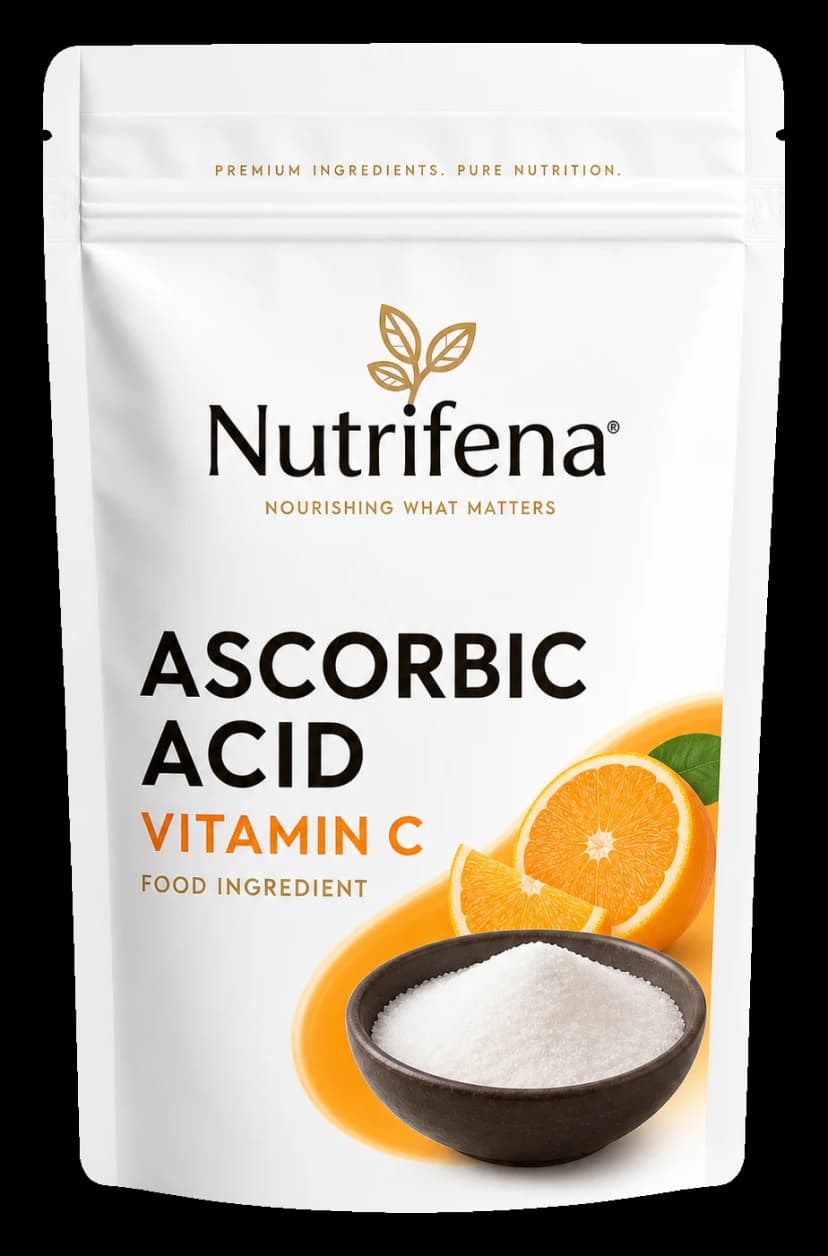
Nutrifena ascorbic acid Vitamin C food ingredient pouch
Overview

Vitamin C Powder — Ascorbic Acid

Ascorbic acid is the chemical form of vitamin C used in food, beverage and supplement formulations for nutritional or technical purposes.

Contact us to discuss specifications, availability and suitability for your application.

Verified product data

L-ascorbic acid — food-grade Vitamin C

The documented grade is L-ascorbic acid produced through a fermentation-based process and specified at 99.0–100.5% purity.

Identity and grade

Identity and grade

Documented grade: L-ascorbic acid

Identity: INS 300 · CAS 50-81-7

Origin: Synthetic origin; China

Process: Fermentation of a sorbitol- and corn-steep-liquor-based substrate

Technical specifications

Technical specifications

Purity: 99.0–100.5%

pH (5% solution): 2.1–2.6

Ash: ≤0.1%

Lead: ≤2 ppm

Packaging and storage

Packaging and storage

Commercial package: 25 kg carton with inner plastic packaging

Shelf life: 1,460 days (4 years)

Storage: Keep closed in a dry, ventilated place, protected from sunlight and moisture

Documented applications

Documented applications

Fortified foods and beverages

Powdered drinks and soft drinks

Bakery and biscuits

Fruit pulp and minimally processed produce

Oils, fats and prepared seasonings

Declarations and scope

Declarations and scope

Documented food functions include Vitamin C fortification, antioxidant activity, browning inhibition, flour improvement and meat-color preservation.

The specification identifies the product as non-GMO; its allergen section is recorded as not applicable.

Technical specification reference

Technical specification reference

Revision: 08

Effective date: April 19, 2024

Confirm the current specification and lot Certificate of Analysis before setting assay, label or use requirements.

Vitamin C ingredient guide

What is ascorbic acid?

Ascorbic acid is Vitamin C: a water-soluble compound used in food and supplement manufacturing for nutritional fortification and selected technical functions. Food-grade L-ascorbic acid is typically supplied as a white to slightly yellow crystalline powder. It is not the same ingredient as citric acid, although formulators may use both in the same product for different purposes.

The right grade depends on assay, particle size, process, target declaration and end use. Heat, oxygen, light, trace metals, pH and storage conditions can affect vitamin retention, so manufacturers should establish any overage and shelf-life target through product-specific testing. Confirm the exact Nutrifena SKU, specification and permitted use before scale-up.

Ingredient value

Ascorbic acid benefits

Ascorbic acid can deliver nutritional and technical value, but performance and label declarations must be validated in the finished product.

Vitamin C fortification

Provides a concentrated source of Vitamin C for qualifying foods, beverages and supplements when the formula and label meet applicable requirements.

Antioxidant function

Can act as an antioxidant or reducing agent in selected food systems, with effectiveness shaped by the full formulation and process.

Bakery process support

May be used as a dough strengthener in selected bakery systems; flour, mixing, fermentation and use level determine the practical result.

For manufacturers

Benefits of Vitamin C for formulation

Concentrated ingredient for precisely controlled Vitamin C additions and finished-product targets.

Dissolves readily in water and can be incorporated into beverage, supplement and food processes.

Supports dry premixes when particle size, segregation risk and addition sequence are controlled.

Pairs with citric acid, maltodextrin, botanical powders, sweeteners and hydrocolloids in multi-ingredient systems.

Can support selected bakery dough-conditioning programs after plant trials establish the appropriate use level.

Available to B2B buyers in packaged and quoted commercial quantities. The current minimum order is shown in the pricing section.

Vitamin C powder explained

Vitamin C powder, L-ascorbic acid and food-grade identity.

The commercial name Vitamin C powder should resolve to an exact chemical identity, grade, assay and supplier specification before a manufacturer uses it.

Vitamin C is the nutrient name; L-ascorbic acid is the chemical identity of the documented Nutrifena grade. JECFA lists Vitamin C as a synonym for ascorbic acid and identifies it as INS 300 and CAS 50-81-7. The dry material is a crystalline powder, while its behavior after addition depends on water, concentration, pH, temperature and the rest of the formula.

Food grade describes a product manufactured and specified for applicable food uses; it is not a universal statement that every ascorbic acid grade is identical. The documented grade on this page is produced through a fermentation-based process, has a specified purity range of 99.0–100.5%, and is supplied in a documented 25 kg commercial package. Current specification and lot COA control the actual shipment.

Vitamin C

The nutrient name used in foods, beverages and supplements. A formula and label must connect the declared amount to the exact approved source.

L-ascorbic acid

The chemical identity of this documented Vitamin C ingredient. It is distinct from citric acid, erythorbic acid and ascorbate salts.

INS 300

The International Numbering System identifier for L-ascorbic acid in food-additive contexts. It does not replace the full ingredient specification.

Food-grade powder

A dry commercial ingredient whose identity, purity, contaminants, package and storage are controlled by the selected product specification.

Assay

The measured content used to qualify the ingredient and support formulation calculations. The documented range is 99.0–100.5% for this grade.

Lot COA

The Certificate of Analysis reports applicable results for the supplied production lot and should be checked against the approved specification.

How it is made

How Vitamin C powder is manufactured.

Industrial routes are supplier-specific. The documented Nutrifena grade uses a fermentation-based process followed by conversion, purification and crystallization to produce food-grade L-ascorbic acid powder.

  1. 01

    Define the production specification

    Set the required L-ascorbic acid identity, assay, impurity limits, physical form, package and quality tests for the commercial grade.

  2. 02

    Prepare the fermentation substrate

    The documented process uses a sorbitol- and corn-steep-liquor-based substrate under controlled manufacturing conditions.

  3. 03

    Run the biological conversion

    A controlled fermentation stage produces an intermediate used in the industrial pathway toward L-ascorbic acid.

  4. 04

    Complete chemical conversion stages

    Supplier-controlled conversion steps transform the fermentation intermediate into the target ascorbic-acid material.

  5. 05

    Purify the product stream

    Separation and purification remove process residues and concentrate the target compound to meet the intended food-grade specification.

  6. 06

    Crystallize L-ascorbic acid

    Controlled crystallization creates the characteristic crystalline material and supports chemical purity and downstream separation.

  7. 07

    Separate and dry the crystals

    The solid material is recovered and dried under controlled conditions to reach the specified finished-powder requirements.

  8. 08

    Control particle form

    Milling, sieving or related finishing may be used to obtain the supplier's commercial particle specification without changing ingredient identity.

  9. 09

    Test and package the lot

    Quality control evaluates identity, assay and applicable purity or contaminant criteria before release into the approved moisture-protective commercial package.

Formulation behavior

How Vitamin C powder behaves in food and beverage systems.

Ascorbic acid is freely soluble in water under the JECFA specification, but dissolution is only the first formulation question. Retention and technical performance depend on the complete process.

In a beverage or liquid supplement, the developer establishes the target Vitamin C amount, calculates the ingredient input from the approved assay, and selects an addition point that fits the process. Dissolved oxygen, headspace, heat, light, pH, trace metals and storage can affect retention. A clear solution at manufacture does not establish nutrient content at the end of shelf life.

In a dry premix, particle size, bulk density and low use level can create segregation or dosing risk. Preblending and an appropriate order of addition can support distribution. In bakery, ascorbic acid may be evaluated as part of a flour-improvement program, but the effective use level and result depend on flour, mixing, oxidation conditions, fermentation and plant process.

Water and dissolution

Define concentration, temperature, mixing time and pH. A generic statement that Vitamin C is water soluble does not validate the finished formula.

Oxygen exposure

Water, mixing, transfer, headspace and package transmission can introduce oxygen. Formula, process and packaging strategies should be evaluated together.

Heat and hold time

Thermal processing and extended warm holding can change retention. Measure the actual time-temperature history of the product.

Light protection

Light transmission through the package can be a stability variable. Select packaging through finished-product evidence rather than appearance alone.

Trace metals and interactions

Minerals, botanical ingredients, colors and other formula components can influence oxidation or sensory behavior and require compatibility testing.

Dry-blend uniformity

Use controlled weighing, preblending and sampling when a relatively small Vitamin C input must be distributed through a large batch.

Overage

Any overage must be scientifically justified for the formula, process, shelf-life target and applicable rules; it is not a substitute for process control.

Finished testing

Raw-material assay and calculations do not prove label content after processing. Establish appropriate finished-product and stability testing.

Ingredient comparison

Ascorbic acid, citric acid and related ingredients are not interchangeable.

These ingredients can appear in adjacent applications, but each has a different identity and formulation role. Availability of one does not imply availability of every alternative.

Ingredient or formatWhat it isKey formulation distinction
L-ascorbic acidVitamin C; the documented powder on this page is INS 300 with a supplier-specific assay and technical specification.Used for Vitamin C fortification and selected technical functions. It contributes acidity but should not be treated as a direct citric-acid substitute.
Citric acidA different organic acid commonly used for acidity, sourness, pH adjustment and related technical purposes.It is not Vitamin C. A formula may use citric acid and ascorbic acid together for separate reasons.
Sodium ascorbateThe sodium salt of ascorbic acid and a separate commercial ingredient with its own molecular weight and sodium contribution.Its pH, taste, elemental sodium, assay and label identity differ from L-ascorbic acid.
Calcium ascorbateA calcium salt of ascorbic acid and a distinct ingredient source.Its calcium contribution, compound weight, assay, solution behavior and regulatory labeling require separate calculations.
Erythorbic acidA stereoisomer-related food ingredient used for technical antioxidant or reducing functions in selected applications.It should not be represented as Vitamin C or substituted into a nutrition formula as if it delivered the same declared nutrient.
Vitamin C premixA supplier-defined blend containing ascorbic acid or another permitted Vitamin C source with a carrier or additional nutrients.Use the complete quantitative composition and premix potency; do not calculate it as pure ascorbic acid.
Botanical Vitamin C sourceA botanical powder or extract whose Vitamin C content and other solids depend on the exact material and specification.Do not assume it has the same concentration, sensory profile, ingredient statement or analytical basis as purified L-ascorbic acid.
Application development

Where manufacturers use Vitamin C powder.

Suitability and use level depend on the selected grade, formula, processing conditions, intended declaration and destination market.

Fortified beverages

Powdered drinks, juices and other beverage concepts can use a calculated Vitamin C addition, subject to dissolution, sensory, processing and retention studies.

Dietary supplements

Powders, capsules, tablets, gummies and liquids require format-specific potency, uniformity, serving, label and stability controls.

Bakery products

Commercial bakeries may evaluate ascorbic acid within flour-improvement and dough-conditioning programs after controlled plant trials.

Fruit systems

Fruit pulp and minimally processed produce applications may evaluate ascorbic acid for documented technical functions and product-specific quality targets.

Confectionery and gummies

Acid, cook temperature, solids, texture, addition point and package affect Vitamin C retention and the final sensory profile.

Dry premixes

Vitamin, beverage and food premixes require controlled potency calculations, carrier selection, blending order, segregation control and moisture protection.

Oils, fats and seasonings

Selected applications may use ascorbic acid within a broader antioxidant or processing system; effectiveness depends on phase behavior and the complete formula.

Private-label manufacturing

A complete brief should define grade, serving target, product category, process, package, label market, annual volume and required documentation.

Specification and procurement

What to confirm before buying Vitamin C powder.

The page shows a documented grade and current commercial pricing, but every purchase must connect the quoted SKU, supplier specification, lot COA and buyer's intended use.

Chemical identity

Confirm L-ascorbic acid, INS 300, CAS 50-81-7 and the exact quoted grade rather than relying on Vitamin C powder alone.

Purity and solution pH

The documented grade specifies 99.0–100.5% purity and pH 2.1–2.6 for a 5% solution. Use current documents for purchasing and release.

Contaminant criteria

Review the documented limits, methods and destination-market requirements. The verified specification includes lead at no more than 2 ppm.

Commercial package

The verified supply record identifies a 25 kg carton with inner plastic packaging. The live pricing section controls current minimum-order information.

Storage and shelf life

Keep the product closed in a dry, ventilated place protected from sunlight and moisture; apply the documented shelf life only to the specified grade and conditions.

RFQ information

Provide application, target declaration, process, quantity, destination, package requirements and the quality or regulatory documents needed for approval.

Commercial uses

Ascorbic acid applications

01Beverages
02Supplements
03Bakery
04Confectionery
05Dry mixes
06Food processing
Starting points for R&D

Three ascorbic acid pilot formulations

Each example is a 2.2 lb (1kg) pilot formulation created for commercial product development. These are starting points, not finished product specifications; validate use level, processing, vitamin retention, sensory performance, nutrition, allergens and regulatory compliance before production.

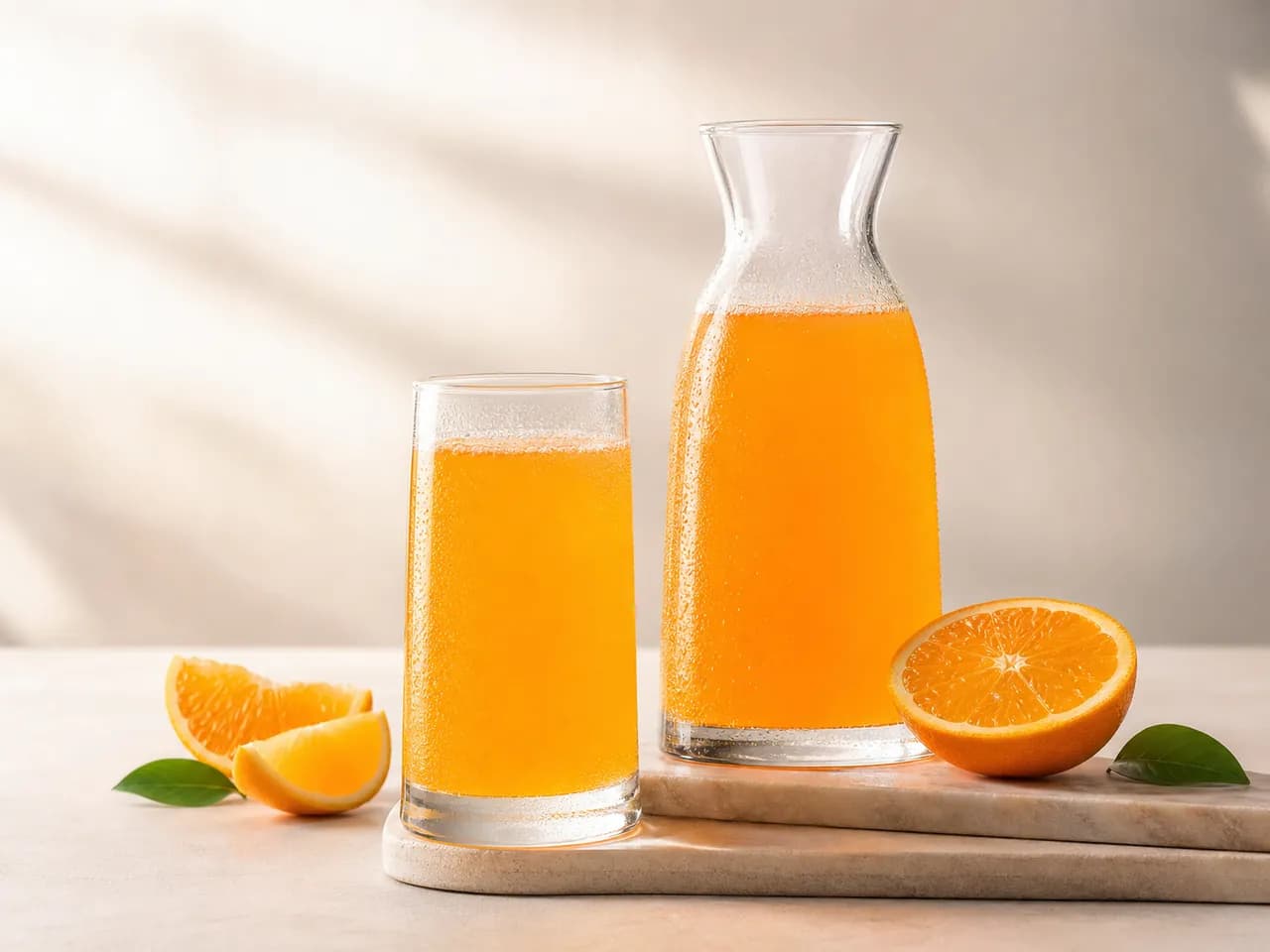
Finished orange citrus beverage in a clear glass and carafe
01

Citrus beverage dry premix

Beverage manufacturers · Powder blends · Food service

Sugar27.51 oz (780g)

Nutrifena Corn Maltodextrin5.64 oz (160g)

Nutrifena Citric Acid1.41 oz (40g)

Natural orange flavor0.53 oz (15g)

Nutrifena Ascorbic Acid — Vitamin C0.18 oz (5g)

Pilot method

Blend all powders until uniform. Establish the serving addition rate, then dissolve into water under suitable agitation. Validate pH, flavor balance, Vitamin C content at manufacture and end of shelf life, packaging protection and storage stability before production.

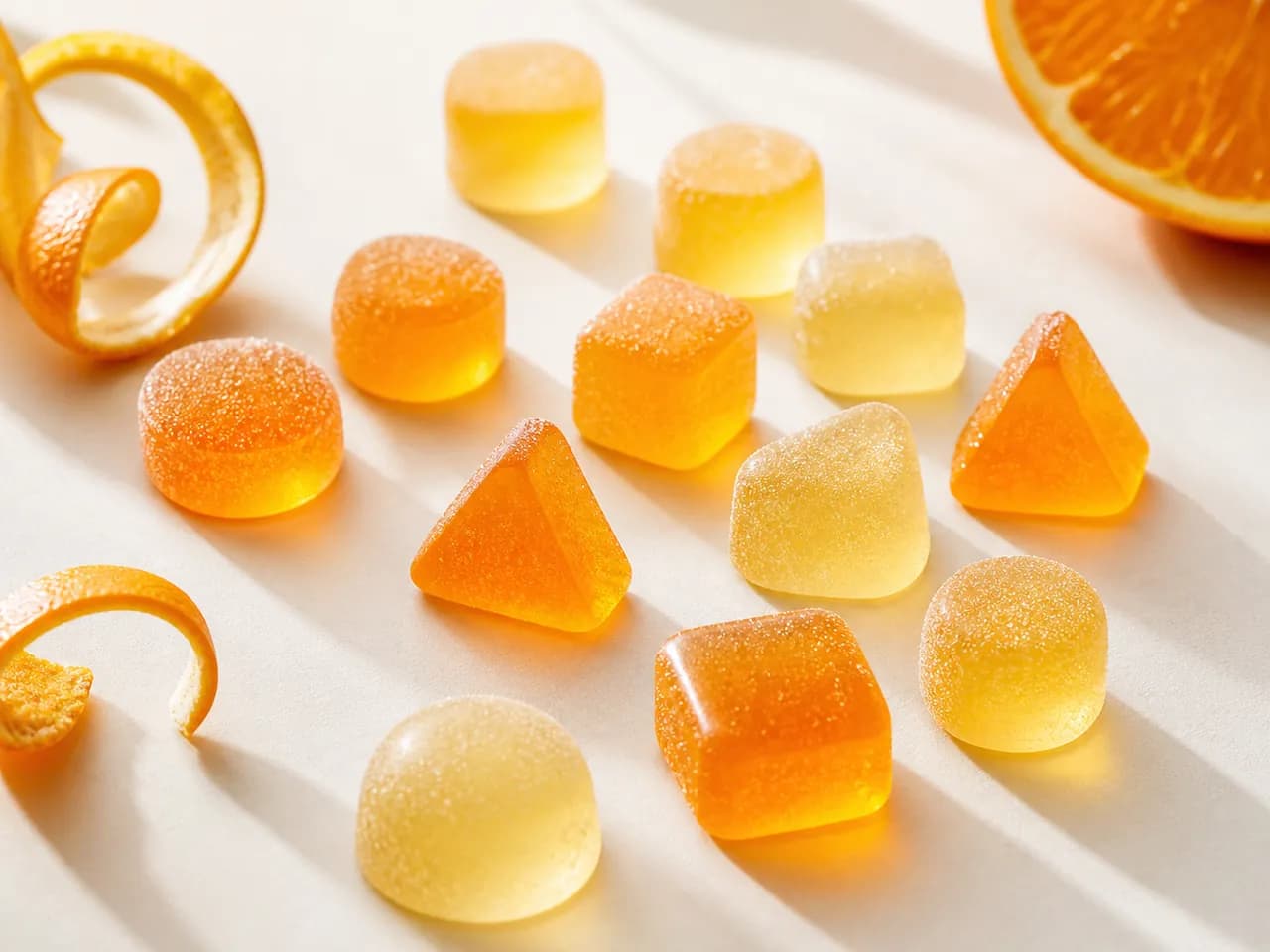
Finished translucent orange and pale-gold citrus gummy candies
02

Citrus gummy confectionery base

Confectioneries · Gummy manufacturers · Product development

Sugar17.64 oz (500g)

Glucose syrup solids8.82 oz (250g)

Gelatin5.29 oz (150g)

Nutrifena Corn Maltodextrin2.47 oz (70g)

Nutrifena Citric Acid0.88 oz (25g)

Nutrifena Ascorbic Acid — Vitamin C0.18 oz (5g)

Pilot method

Pre-blend the acids with part of the sugar and maltodextrin. Develop the required water addition, gelatin bloom and cook sequence, adding ascorbic acid at the lowest practical temperature. Validate final solids, pH, set, flavor, Vitamin C retention, water activity and shelf life.

Finished sliced white sandwich bread with a fine uniform crumb
03

White sandwich bread dry base

Commercial bakeries · Bread manufacturers · R&D teams

Wheat flour32.80 oz (929.9g)

Sugar1.41 oz (40g)

Salt0.71 oz (20g)

Instant yeast0.35 oz (10g)

Nutrifena Ascorbic Acid — Vitamin C0.004 oz (0.1g)

Pilot method

Disperse the ascorbic acid through a suitable flour pre-blend before combining the dry ingredients. Develop water, fat and process additions separately for the plant formula. Validate mixing tolerance, proof time, loaf volume, crumb, sensory quality and local regulatory use level before production.

Buyer questions

Ascorbic acid FAQ

Does Nutrifena have a minimum order quantity for ascorbic acid?

Yes. The current minimum order is shown in the pricing section. Availability, packaging, freight and lead time are confirmed in the quote.

Is ascorbic acid the same as Vitamin C?

Yes. L-ascorbic acid is Vitamin C. The supplied grade, assay and documentation should still be matched to the intended food, beverage, bakery or supplement application.

Are ascorbic acid and citric acid interchangeable?

No. Ascorbic acid is Vitamin C and can have nutritional or technical functions. Citric acid is commonly used for acidity and pH control. A formula may contain both, but they serve different purposes.

How should I select an ascorbic acid grade?

Share the intended application, declaration, target Vitamin C level, process, particle-size needs, package size, quantity and destination. Nutrifena can then identify the relevant available SKU and documentation.

How stable is Vitamin C during processing?

Retention depends on heat, oxygen, light, trace metals, pH, water activity, packaging and storage. Establish the process addition point and any overage through finished-product and shelf-life testing.

Can ascorbic acid be used in commercial bread?

Ascorbic acid may support dough strengthening in selected bakery systems. The appropriate use level depends on the flour and process and must be established through plant trials and applicable regulatory review.

Can I request technical and label information?

Yes. Include the required grade, application, process, package size, quantity and destination in your enquiry so the team can identify the relevant SKU and available documents.

How is Vitamin C powder made?

The documented L-ascorbic acid grade uses a fermentation-based industrial pathway followed by supplier-controlled conversion, purification, crystallization, drying, particle finishing, quality testing and commercial packaging.

Is Vitamin C powder the same as sodium ascorbate?

No. L-ascorbic acid and sodium ascorbate are different compounds with different molecular weights, sodium contribution, pH behavior and label identities. Use the exact ingredient specification in formula calculations.

Does water-soluble mean Vitamin C remains stable in a beverage?

No. Dissolution and stability are separate. Oxygen, heat, light, pH, trace metals, other ingredients, package and storage can affect retention after the powder dissolves.

What should a Vitamin C powder RFQ include?

Provide the application, exact grade or acceptable specification, target Vitamin C declaration, process, package, annual volume, destination and required quality or regulatory documentation.

Regulatory and specification note: The FDA identifies ascorbic acid as Vitamin C and lists technical effects including antioxidant, dough strengthener and nutrient supplement. Review the FDA Substances Added to Food inventory and the FAO/WHO JECFA ascorbic acid specification alongside the approved Nutrifena SKU specification before setting use levels, claims or purchasing requirements.

Request information

Contact us to discuss specifications, availability and suitability for your application.

Request a quote